
Carbs Per Hour on the Bike: 90, 120 or More
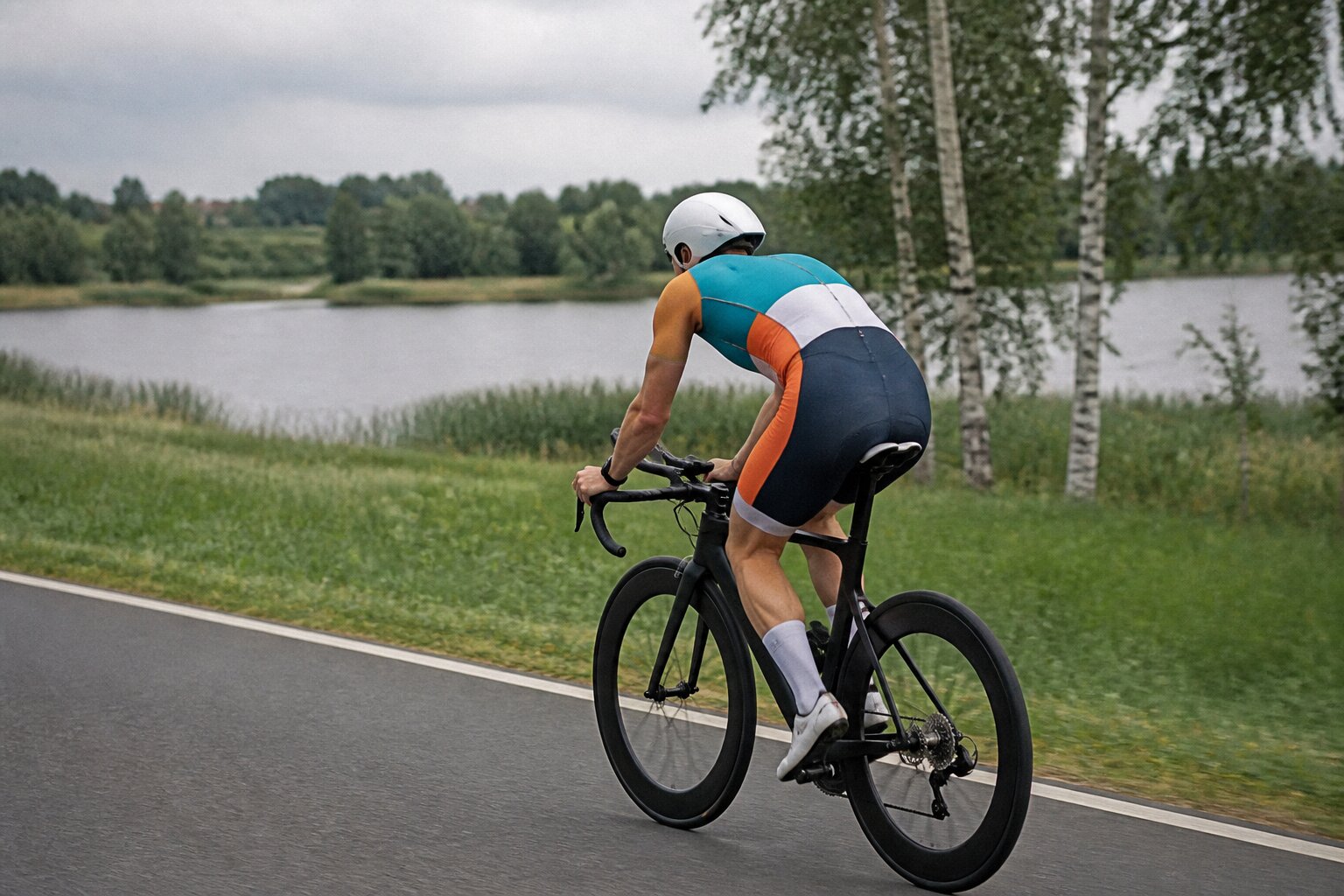
A triathlon run does not fail in the legs, it fails in the stomach. Most amateurs who fade in the final kilometres are not undertrained. They are running low on fuel, because they ate too little through the whole bike leg. The bike is the dining table. The only question is how much actually fits in an hour.
The numbers to start from
The longer the race, the more carbohydrate per hour it takes. Short efforts need roughly 30 to 60 g/h. Very long races need more. Specifically for triathlon:
- 70.3 (half distance): about 60 to 90 g/h
- Full IRONMAN: about 90 to 120 g/h
Most of that dose gets taken on the bike. It is the calmest discipline, the one where the stomach tolerates food best. Everything bounces around on the run and absorption drops, so the bike is the moment to fill the tank completely.
Why glucose alone is not enough
This is where the physiology explains the rest. The gut absorbs glucose through a specific transport channel that has a ceiling, around 60 g/h. Anything above that sits in the stomach, ferments, and ends in cramps or a stop in the bushes. That is why 60 g/h was treated as the physical limit for years.
The breakthrough was a second channel: fructose absorbs through a separate route. Combining glucose with fructose bypasses the bottleneck and lets the body oxidise significantly more carbohydrate per hour. A 2:1 ratio of glucose to fructose was the historical standard; newer products lean toward 1:0.8. That is why modern gels and drinks list both sugars on the label. It is not marketing, it is gut throughput.
Individual tolerance: do not copy the pros
Before aiming for 120 g/h because that is what a champion does, remember the gut is not the same from person to person. The differences are large: some athletes do not absorb much more than 55 g/h, others handle 120 g/h or more over many hours of racing.
Which is why dosing should never be guessed on race day. It is set in training, gram by gram. The goal is the highest dose the stomach tolerates without revolt, not the highest number from a table online.
How to train the gut
The good news: gut throughput is a trainable trait, just like FTP. The bad news: it has to be trained deliberately, not left to chance on race day.
The method is simple. Pick long bike rides and treat them as a dress rehearsal for nutrition. Start from a dose already familiar, say 60 g/h, and add 10 to 15 g/h every few weeks. Train on the same gels and drinks planned for race day, since the stomach prefers what it already knows. After every ride, note what and how much was eaten and how the stomach reacted. After a few weeks, there is a proven personal strategy instead of a guess.
More fuel during the ride means less glycogen burned, which means more left for the final run, right when the competition is already slowing down.
The most common amateur mistake
It is not the wrong product or the wrong sugar ratio. It is simply eating too little, too late. The first gel should not wait for hunger or a drop in power, by then it is already too late and the energy deficit is building. Fuel from the first minutes of the bike leg, in a steady, regular rhythm, before the tank runs dry.